You get home. You put your bag down. Maybe you change clothes. Maybe you reheat dinner. Maybe someone asks, “How was your day?”
And somehow, even though you are technically home, you are not really there.
Learning how not to bring work stress home isn’t about becoming perfectly balanced. You don’t just “leave work” anymore.
You carry it –
in your mind,
in your mood,
sometimes even in your sleep.
This is one of the quietest kinds of exhaustion – not the kind that makes you collapse into bed, but the kind that steals your evenings slowly, makes you half-present at dinner, and turns Sunday nights into small anxiety spirals.
That’s the moment most people start quietly searching for an answer – how not to bring work stress home – not in a dramatic way, but in that slow realization that rest doesn’t feel like rest anymore.
And the worst part? Most people just call it “being dedicated.” It’s not. It’s a habit without a boundary. And it’s costing you more than you realize. Stop bringing work stress home.
But here’s the truth…
👉 You can break this cycle.
“Work stress doesn’t follow you home because you’re a worrier. It follows you because your brain is wired to keep chasing unfinished things – and work is almost always unfinished.”
“This is exactly why learning how to not bring work stress home has become so important today.”
Why Work Stress Follows You Home
You have seen the short insight above – now here’s the deeper layer:
Work stress doesn’t follow you home because you are weak. It follows you because your brain keeps refreshing unfinished tasks… like a browser with 27 tabs open.
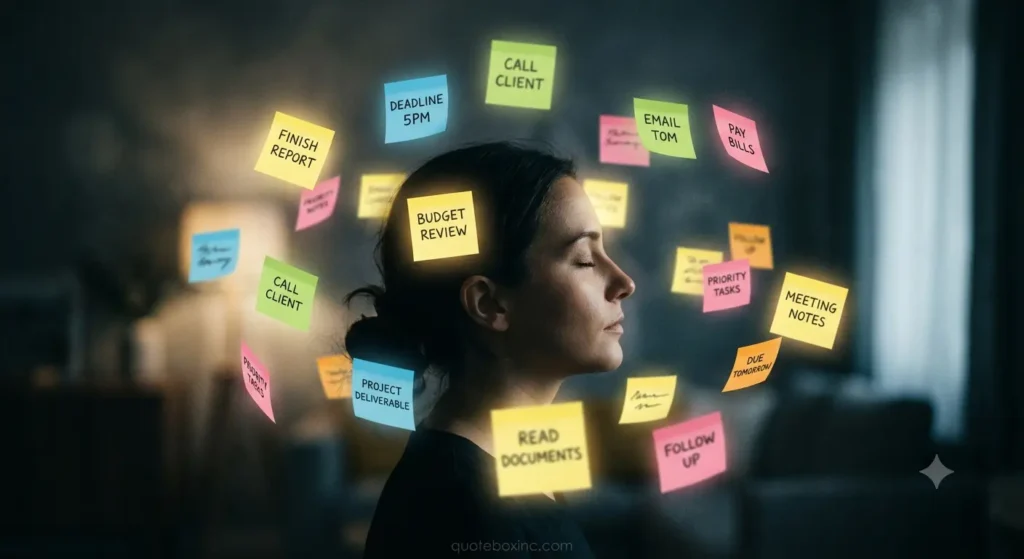
That is especially true if you care about doing well, hate disappointing people, or already run on a baseline level of stress.
Over time, this is how stress builds – not from one big moment, but from constant mental carryover. Being always available, under-rested, and stuck in negative thinking loops keeps your brain switched on long after work hours.
That matters because sometimes the reason work follows you home is simple: you never actually left work mentally.
And that’s the part most advice misses. Learning how to switch off after work isn’t about effort – it’s about creating a clear mental off-ramp your brain can recognize.
And that gap? That is where your evenings disappear. And most people don’t even notice its happening.
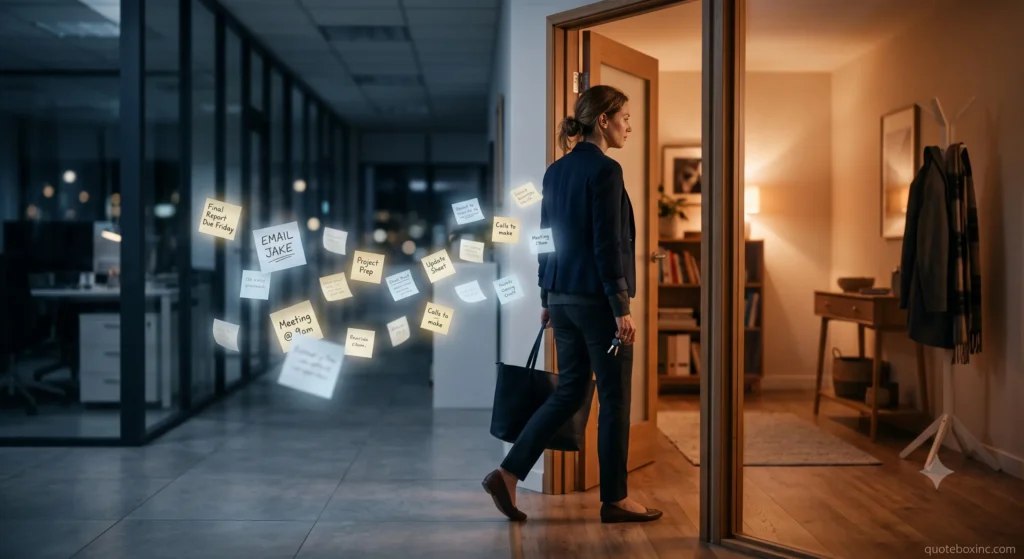
What Actually Helps Instead of Just “Thinking Positive”
This Is Known as the “Rumination Trap” that Nobody Talks About.
Most advice tells you to “leave work stress at work.” Simple enough. Except it doesn’t work – because the moment you try to stop thinking about something, that thing tends to get louder.
This is what psychologists call thought suppression backfire. Push hard enough to not think about the difficult meeting, and your brain will bring it up even more. The goal isn’t to eliminate work thoughts, after work thoughts – it’s to stop being ambushed by them.
The healthier approach is what metacognitive therapy calls mental flexibility: letting a work thought come in, acknowledging it, then consciously deciding whether to engage with it right now or set it aside for later. You’re not suppressing it. You’re choosing when it gets your attention.
That shift – from being controlled by the thought to being in control of it – is where the real relief starts.
This is also why trying to stop thinking about work after work rarely works on its own. The goal isn’t silence – it’s control over when those thoughts get airtime.
The brain isn’t being dramatic. It’s trying to protect you from dropping something important – even when that “important” task can wait until tomorrow.
Signs It’s Already More Than “Just Stress”
There is a difference between a hard week and a pattern that’s become your normal. These signs are worth paying attention to – not as a checklist of failure, but as honest signals from a body that is carrying too much.
When these patterns repeat, it stops being “just a busy phase” and starts becoming your baseline. That’s usually when people realize their work stress at home isn’t temporary anymore.
None of these make you weak. They make you human, and they make you someone who’s been running too long without a real stop. But ever thought of how to switch off after work ?
If several of these feel very familiar – and have for a while – it may be worth speaking to a therapist or counselor. Stress that goes unaddressed long enough stops being situational and starts becoming structural.
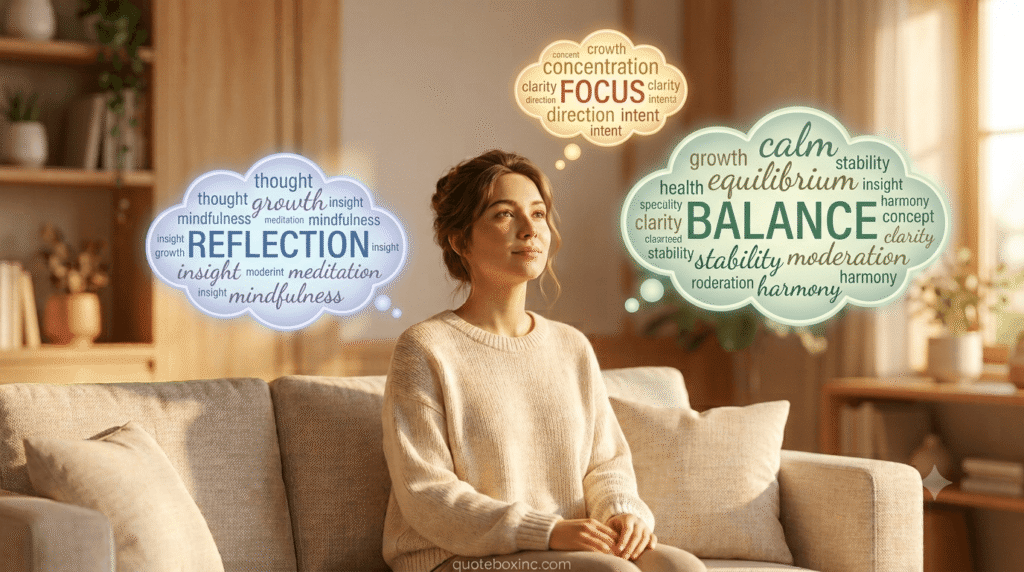
So instead of forcing balance, the goal becomes simpler – building small, repeatable ways to return to yourself after work.
What Actually Helps (Honest Edition)
This isn’t about productivity hacks or perfect routines. Just a few things that, done consistently, actually make a difference. This is why learning how to not bring work stress home is less about discipline – and more about giving your mind a clear place to stop.
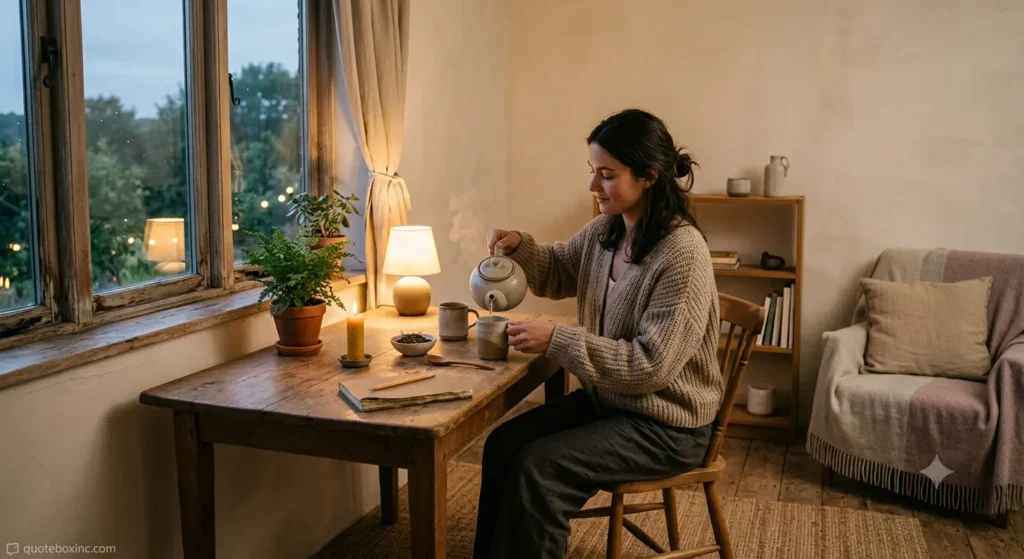
Give your day a real ending
Write down tomorrow’s top three tasks before you close your laptop. Your brain stops looping because it now has somewhere to put those thoughts. Then close the laptop. Physically close it. Say “done” out loud if that helps – it sounds silly until the third time it works.
Build a transition – even a small one
Your mind needs a commute even when your body doesn’t. Ten minutes of music, a walk around the block, changing your clothes – any repeatable ritual that sits between work-you and home-you. The ritual itself isn’t magic. The consistency is.
Vent once, then close the loop
Tell someone how the day went. Say the frustrating thing out loud – one time. Then consciously decide to stop. Processing helps. Replaying it all evening doesn’t. Give yourself a fifteen-minute window and then choose to move on.
Rest that’s actually rest
Scrolling your phone is not recovery. Your brain is still processing input, just different input. Real rest means something low-stimulus – a walk, cooking, reading, sitting outside. Boring on paper. Actually restorative in practice.
Flex your boundaries, don’t force them
Rigid rules (“no phones after 7 PM ever”) usually crack under pressure and leave you feeling guilty when they do. A flexible intention works better: “I’ll check in once after dinner if I need to, then I’m done.” You stay in control without setting yourself up to fail.
If your mind is still racing at your desk, a tiny reset during the workday can make the evening transition easier.
You don't need all five. Pick the one that makes the most sense for where you are right now and start there. One small habit done consistently beats five perfect ones done once.

Final Thoughts
If you are trying to figure out how not to bring work stress home, the answer is not becoming a different person overnight
When your identity is deeply wrapped in what you do, the job becomes everything - the main place you feel competent, needed, and purposeful. So of course your brain keeps going back there. It's where your sense of self lives.
It is learning how to close the loop. It's about remembering that you existed - with opinions, interests, and energy - before this job title did. The version of you that had hobbies, that laughed without it being about networking, that rested without guilt. That person didn't disappear. They just got buried under a lot of meetings.
Building something in your evenings that's genuinely yours - not productive, not career-adjacent, just yours - isn't wasted time. It's what makes you sustainable.

You are allowed to care about your work without letting it eat the rest of your life. And honestly, that is probably the boundary that matters most
The Work Will Still Be There Tomorrow
You don't need to solve everything tonight. You don't need to carry every unfinished thread into your evening and unpack it across your dinner table.
The emails will wait. The decisions can breathe. And the version of you that shows up better tomorrow? That person gets built in the hours you actually take for yourself tonight.
Start with one thing. One small ritual. One evening that actually belongs to you - without work following you into it
FAQ Section
Because trying to stop thinking about something often makes it louder, not quieter. Your brain keeps circling unfinished tasks looking for closure. The fix isn't willpower - it's a clear "day is over" signal, like writing tomorrow's tasks down and closing the laptop deliberately.
The simpler the better. Changing your clothes when you get home, a ten-minute walk, or making tea - anything repeatable that sits between work-mode and home-mode. The ritual doesn't need to be sophisticated. It needs to be consistent.
Rest isn't a reward for a productive day - it’s maintenance. You’re allowed to stop without earning it.
Yes. Especially if you are dealing with constant rumination, anxiety, burnout, or difficulty being present at home.